Form Builder Introduction - Start Building a Form
In this article, we'll explore the various fields available in 3PM's form builder, examining their functionalities, customization options, and how they can streamline data collection for your specific needs.
Creating a new form
To get started building a form, select the Form Builder tab from the top and the select the Create New Form button on the top right.
In the dialogue box that opens, from the first drop down field, select the Section the form belongs in, i.e. Projects, Assets, Resources, HSQE
Select an Icon for your form. (This is an optional field)
Next give your form a descriptive Name and select Create when complete.
Adding fields to a form
Now you are in the authoring screens of the form builder. On the left you will see the fields available for you to click and drag to the canvas in the middle.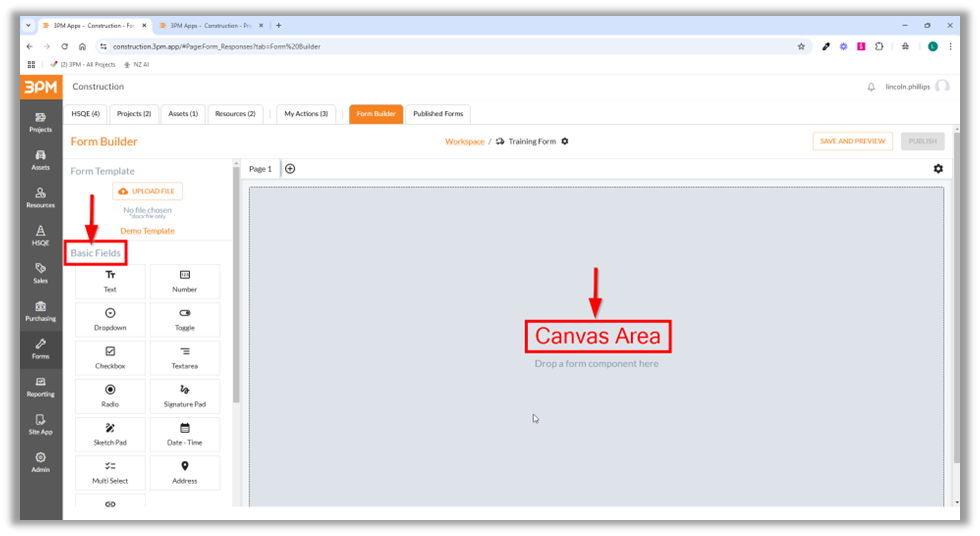
When you click and drag a field to the canvas, a properties panel will open on the right side that gives you options to configure the field.
Properties Pane
1. Basic Section
In the properties panel in the BASIC section, you will have the option to assign a name to the field (Field Label) which will show on the form and specify a Default Value if required, such as the name of a designated contact person.
2. Grid Layout
This option allows you to organize the forms line structure by selecting one of three configurations: a three-column layout, a two-column layout, or a single-column layout with one field per line.
3. Pre Populate
4. Validation Section and Custom Error Message
Check the "Mandatory" box to make the field required for submission. A red asterisk will appear next to the field in the form to indicate it is mandatory. You can specify the minimum and maximum length of the input. Add a Custom error message to guide users in entering the correct information should they not complete the field when submitting the form (not required).
5. Field References

Related Articles